
Sump Pump Installation and Services in Miami
Slug: `/sump-pump-services/` Focus keyword: sump pump installation miami Rank Math SEO title (55 chars): Sump Pump Installation Miami | Flood Protection Pros Meta description (157 chars): Sump pump installation in Miami for hurricane-season flooding and low-elevation homes. Battery backups and maintenance. Free estimates: +13057036568. H1: Sump Pump Installation and Services in Miami
—
Miami-Dade County sits just a few feet above sea level, and when a summer thunderstorm stalls over Kendall or a tropical system pushes storm surge toward Miami Beach, water looks for the lowest point it can find. For many homes, that is the basement, the crawl space, or the ground floor.
A sump pump is your last line of defense: it collects water in a pit (the sump basin) and pumps it safely away from your home before it can flood living space. Miami Plumber Co connects you with trusted local pros across Miami-Dade for sump pump installation, battery backup systems, repairs, and maintenance.
Protect your home before the next storm. Call +13057036568 for a free sump pump estimate.
What This Service Includes
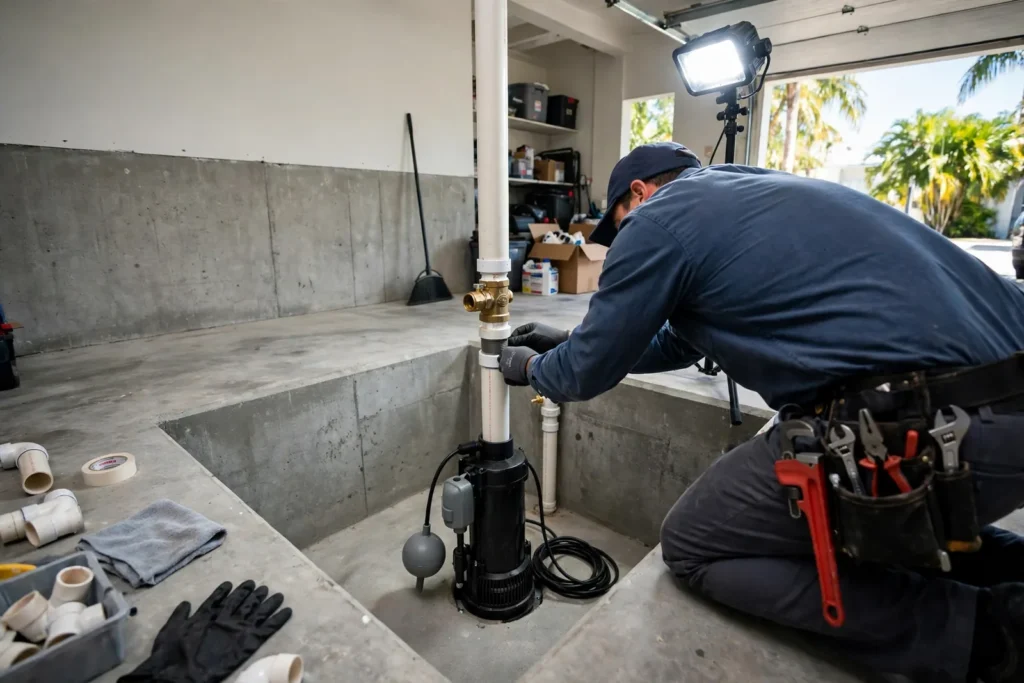
Sump pump installation for Miami homes — a pump that collects water in a basin and pumps it safely away from your home before it can flood living space.
- Site assessment: lowest point, water entry patterns, electrical supply, and discharge route
- Basin installation: sump pit excavated, basin set in gravel for drainage
- Pump and float switch setup, with a check valve on the discharge line
- Discharge routing to a safe outlet away from the foundation
- Electrical connection on a dedicated GFCI-protected outlet
- Testing after installation
- Battery backup systems that take over automatically when power fails
- Submersible and pedestal pump options, matched to flood risk and layout
Why Miami Homes Need Sump Pumps
Sump pumps are not just for houses with basements. In Miami-Dade, they make sense for more homes than most people realize:
Low elevation. Much of the county sits at or just above sea level, with USGS surveys of low-lying areas of the county recording average elevations of about 6 feet, and some neighborhoods sit even lower. When heavy rain falls faster than the ground can absorb it, water pools against foundations.
Hurricane season. From June through November, tropical systems can drop a foot of rain in a day. Even tropical storms that never make landfall here send feeder bands that flood streets in Hialeah, Sweetwater, and Homestead.
High water table. The Biscayne Aquifer keeps groundwater close to the surface across Miami-Dade. After sustained rain, that water table rises and pushes moisture up through slab edges and into low-lying rooms.
King tides and storm surge. Coastal neighborhoods from Miami Beach to Coconut Grove deal with tidal flooding that backs up drainage and pushes water toward homes at street level.
Afternoon thunderstorm season. Even outside hurricane season, Miami’s daily summer downpours can overwhelm gutters and grading, sending sheets of water toward foundations.
If your home has ever had standing water in a garage, utility room, or ground-floor space after heavy rain, a sump pump is worth a serious conversation.
How a Sump Pump Works
The concept is simple and reliable:
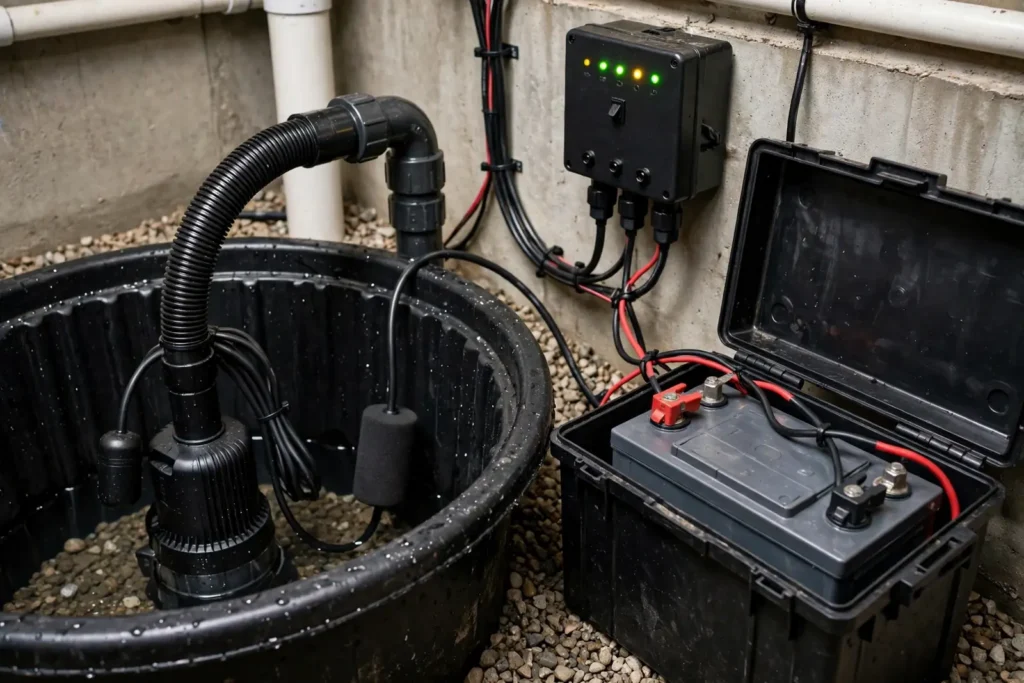
1. The sump basin is a pit dug at the lowest point of the area being protected, typically in a basement, crawl space, or low corner of a garage. 2. Groundwater and seepage flow into the basin through the soil or through a perimeter drain system. 3. A float switch rises with the water level and triggers the pump automatically. 4. The pump pushes water out through a discharge pipe to a safe location away from the foundation, usually the yard, a storm drain, or a dry well. Miami-Dade rules require clear-water discharges to be kept out of the sanitary sewer system, so a licensed pro routes the discharge accordingly.
The whole system runs automatically. You do not flip a switch when it rains; the pump handles it on its own, day or night.

Types of Sump Pumps
A trusted local pro will help you choose the right type for your home’s flood risk and layout:
The pump sits inside the basin, submerged in water. Submersible models are quieter, handle larger volumes, and are less obtrusive. They are the most common choice for Miami homes with real flood exposure.
The motor sits on a pedestal above the basin with only the intake in the water. Pedestal pumps are easier to service and typically cost less upfront, but they are noisier and handle less volume. They suit lower-risk situations like a garage that only puddles in extreme rain.
This is the critical add-on for Miami. Hurricanes knock out power, and a sump pump without power is just a hole in the floor. A battery backup system takes over automatically when the power fails. A quality deep-cycle marine battery typically provides several hours of continuous pumping per manufacturer specifications (Zoeller specifies about 5.5 hours on a 100+ amp-hour battery), and considerably longer when the pump cycles intermittently, as it does in most storms. For hurricane-season protection, a primary pump plus battery backup is the standard recommendation.
Many Miami installations pair a primary AC-powered pump with a DC battery backup in the same basin, plus a high-water alarm that alerts you if both systems are overwhelmed. This layered setup is the gold standard for low-elevation homes.
Pumps are rated in gallons per hour (GPH) and by horsepower. An undersized pump cannot keep up with a real storm; an oversized one short-cycles and wears out faster. A local pro sizes the pump to your home’s actual water load, basin size, and discharge distance.
Sump Pump Installation: What to Expect
A professional sump pump installation in a Miami-Dade home typically includes:
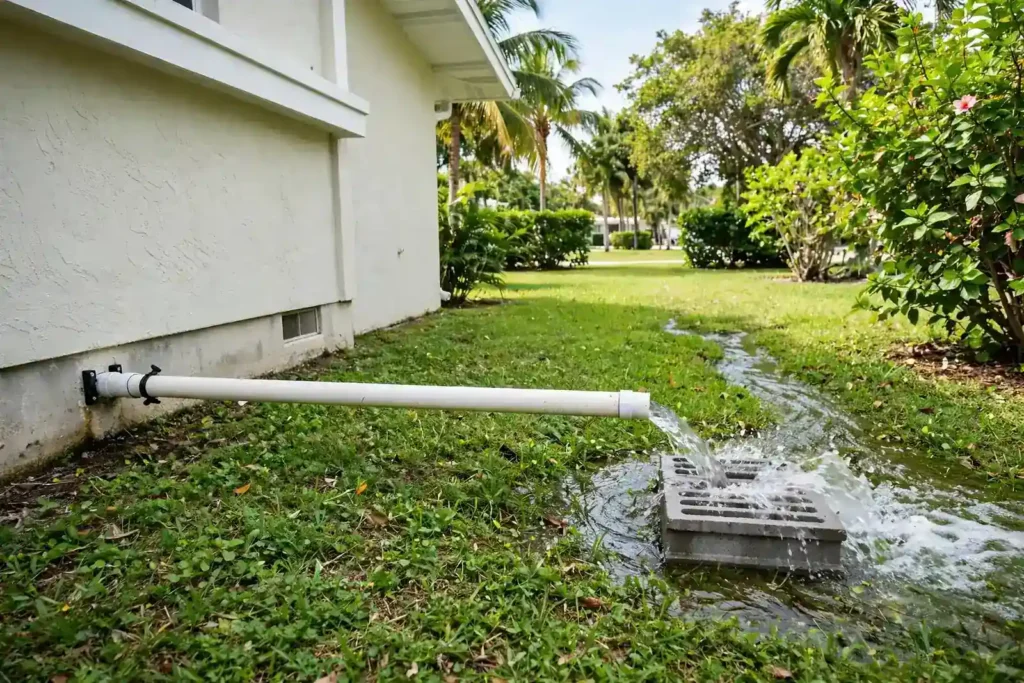
1. Site assessment. The pro identifies the lowest point, evaluates water entry patterns, and checks the electrical supply and discharge route. 2. Basin installation. The sump pit is excavated and the basin set in gravel for drainage. 3. Pump and float switch setup. The pump is positioned, the float switch adjusted, and the check valve installed on the discharge line (this prevents pumped water from flowing back into the basin). 4. Discharge routing. The discharge pipe is run to a safe outlet away from the foundation. Freeze protection is not needed in Miami, but the discharge must be kept out of the sanitary sewer, as Miami-Dade rules require. 5. Electrical connection. A dedicated GFCI-protected outlet is installed for the pump, as current electrical code requires for sump pumps (NEC 422.5(A)). 6. Testing. The system is tested by filling the basin and confirming the pump cycles correctly, the check valve holds, and the alarm (if installed) sounds.
Most residential installations take a half day to a full day.
Sump Pump Maintenance for Miami Homeowners
Miami’s storm season punishes neglected sump pumps. A simple maintenance routine keeps yours ready:
- Test quarterly. Pour a bucket of water into the basin and confirm the pump activates, pumps the water out, and shuts off. Do this before June (hurricane season) at minimum.
- Clean the basin yearly. Sediment, sand, and debris from Miami’s sandy soil accumulate in the basin and can jam the float switch or clog the intake.
- Check the discharge line. Make sure the outlet is clear of mulch, landscaping, and debris, and that water actually flows away from the house.
- Test the battery backup. Backup batteries typically need replacement every 3 to 5 years. Test the backup by unplugging the primary pump and confirming the battery unit takes over.
- Listen for odd sounds. Grinding, rattling, or a pump that runs constantly may signal a stuck switch, a failing motor, or a check valve problem.
- Consider a water alarm. An inexpensive alarm in the basin gives you early warning if the pump fails during a storm.
If your pump is more than 7 to 10 years old, runs constantly, or cannot keep up during heavy rain, it is time to talk about replacement.
When Flooding Is Already Happening
A sump pump prevents future flooding, but it cannot help in the middle of an active flood emergency. If water is entering your home right now:
- Move valuables and electronics to higher ground
- Shut off electricity to flooded areas if it is safe to do so
- Do not wade through standing water that may contact electrical outlets
- Call for 24/7 emergency plumbing help to address the immediate water intrusion
Once the emergency is handled, a sump pump installation is the conversation that keeps it from happening again.
Service Areas
Miami Plumber Co connects homeowners with trusted sump pump pros throughout Miami-Dade County, including Miami, Hialeah, Kendall, Miami Beach, Homestead, North Miami, Coral Gables, Doral, Sweetwater, Cutler Bay, and surrounding neighborhoods.
—
CTA Blocks
Primary CTA (after intro):
Hurricane season does not wait. Get a free sump pump estimate from a trusted local pro today. Call +13057036568.
Mid-page CTA (after battery backup section):
Power outages kill standard sump pumps. Ask about battery backup systems built for Miami storms. +13057036568
Closing CTA (after FAQ):
Serving all of Miami-Dade County. Free estimates, honest sizing advice, hurricane-ready installations. Call Miami Plumber Co at +13057036568.
—
*Internal links used: 24/7 emergency plumbing (flooding emergency section).* *Word count: ~1,450. Verification markers remaining: 0. Placeholder markers: 0.*
—
Frequently Asked Questions
Do I need a sump pump if I don't have a basement?
Possibly. Many Miami homes have no basement but still take water in garages, utility rooms, or ground-floor spaces because of low elevation and a high water table. If you have ever had standing water inside after heavy rain, a sump pump can help.
How much does sump pump installation cost in Miami?
Costs depend on the pump type, whether a basin must be excavated, the discharge routing, and whether you add battery backup. You will get a free, written estimate before any work starts. Call +13057036568 for pricing on your specific situation.
Will a sump pump work during a hurricane power outage?
Only if it has battery backup. Standard sump pumps run on household electricity, which hurricanes routinely knock out. A battery backup system switches on automatically when power fails, which is why it is strongly recommended for Miami homes.
How long do sump pumps last?
A quality primary sump pump typically lasts 7 to 10 years, with battery backup batteries needing replacement every 3 to 5 years. Regular testing and cleaning extend service life.
Where does the sump pump discharge the water?
The discharge pipe routes water to a point well away from the foundation, such as the yard or a storm drain connection. Miami-Dade rules require clear-water discharges to stay out of the sanitary sewer, and a licensed pro will route it correctly.
Can a sump pump handle a full hurricane?
A properly sized primary pump with battery backup handles the heavy rainfall most storms deliver. No residential system is guaranteed against catastrophic flooding from major storm surge, but a sump pump dramatically reduces damage from the rain-driven flooding Miami sees most often.
How often should I test my sump pump?
Test it quarterly at minimum, and always test before hurricane season starts in June. Pour water into the basin and confirm the pump cycles on and off correctly.
—