
Slab Leak Repair in Miami
Slug: `/slab-leak-repair/` Focus keyword: slab leak repair miami Rank Math SEO title (57 chars): Slab Leak Repair Miami | Detection & Repair Experts Meta description (156 chars): Slab leak repair in Miami with non-invasive detection and honest repair options. Warm floors, high water bills? Free estimates. Call +13057036568. H1: Slab Leak Repair in Miami
—
A slab leak, water escaping from a pipe buried under your home’s concrete foundation, is one of the most damaging plumbing problems a Miami homeowner can face. Because the leak hides beneath the slab, it can run for weeks or months before anyone notices, quietly eroding soil, cracking concrete, and driving up water bills.
Most South Florida homes sit on concrete slab foundations, which makes slab leaks a genuinely local problem here, not a rare edge case. Miami Plumber Co connects you with trusted local pros across Miami-Dade who specialize in finding slab leaks accurately and fixing them with the least invasive method that actually works.
Suspect a slab leak? Call +13057036568 for a free estimate and fast detection.
What This Service Includes
Slab leak detection and repair for water escaping from pipes under your home’s concrete foundation — located first with specialized equipment, then repaired by the method that fits.
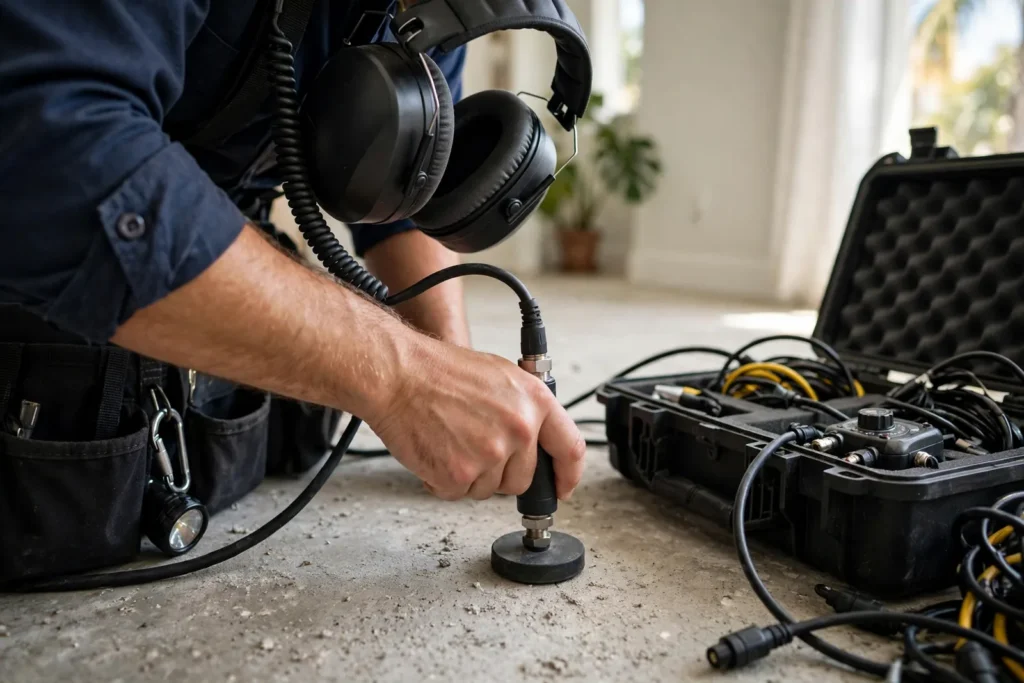
- Acoustic listening devices to triangulate the leak through the concrete
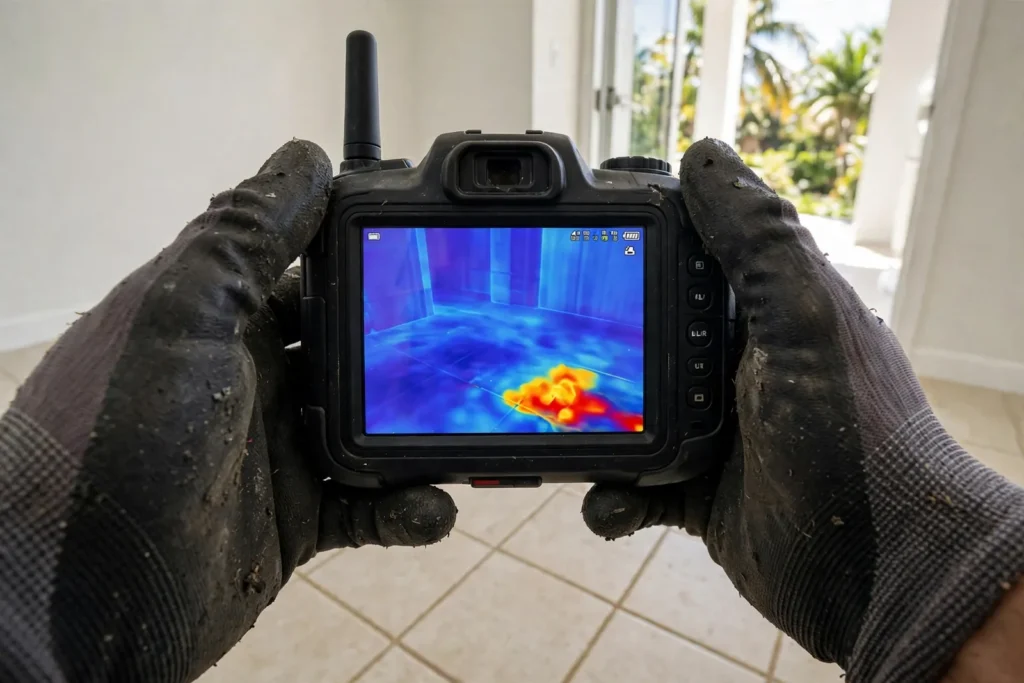
- Thermal imaging to narrow the search where hot water has warmed the slab
- Moisture meters and humidity mapping to confirm where moisture has spread
- Pressure testing to confirm which line is leaking
- Video pipe inspection for drain-side slab leaks
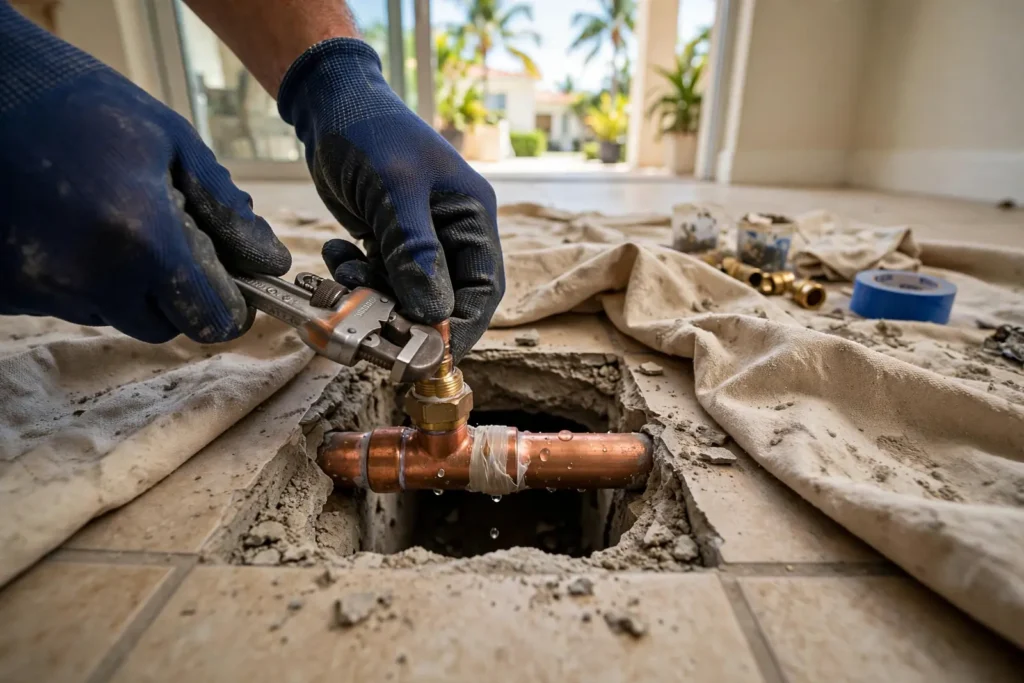
- Spot repair: opening the slab at the leak's exact location and replacing the damaged section
- Rerouting: abandoning the leaking line and running a new line through walls or the attic
- Epoxy barrier coating inside the existing pipe to seal pinhole leaks
Why Slab Leaks Happen So Often in Miami
South Florida’s geology sets the stage for slab leaks in a way that few other regions experience:
Slab-on-grade construction. The vast majority of Miami-Dade homes are built on concrete slabs poured directly over the ground, with water and sewer lines running underneath. There is no crawl space or basement to spot a leak early.
Biscayne Aquifer and limestone soil. Miami sits above the Biscayne Aquifer, and the ground beneath the city is porous limestone. When a pipe leaks under the slab, water does not just sit there: it moves through the limestone, washing out the sandy soil that supports the foundation. Over time this soil erosion can cause the slab to settle or crack.
High water table. In much of Miami-Dade, the water table sits only a few feet below the surface. Constant moisture around buried pipes accelerates corrosion of copper lines, which is one common pipe material in older homes.
Shifting and settling. South Florida’s sandy, shifting soil means homes settle subtly over the years. That movement stresses the pipes embedded in and beneath the slab, and stress plus corrosion plus water pressure eventually produces leaks.
Hard water corrosion. Miami-Dade water comes from the hard-water Biscayne Aquifer, and mineral-heavy water flowing through copper pipes for decades contributes to pinhole leaks from the inside out.
Signs You May Have a Slab Leak
Slab leaks hide, but they leave clues. Watch for these warning signs, especially in older homes in Hialeah, Kendall, Little Havana, Homestead, and North Miami:
- Unexplained high water bills. Your usage has not changed, but the bill jumped. A leak under the slab can waste thousands of gallons a month (per EPA WaterSense, 10% of U.S. homes have leaks that waste 90 or more gallons per day).
- Warm spots on the floor. A hot water line leaking under the slab heats the concrete above it. Walk barefoot: a noticeably warm patch of tile or flooring is a classic sign.
- The sound of running water when every tap is off. Press your ear to the floor or a wall in a quiet house.
- Damp or warped flooring. Tile that feels damp, laminate that buckles, or carpet that stays wet in one spot.
- Cracks in walls or flooring. As leaking water erodes soil under the slab, the foundation settles unevenly, and cracks appear in tile, drywall, or stucco.
- Mold or mildew smells. Persistent musty odors, especially near the floor, suggest hidden moisture.
- Low water pressure. A leak bleeds pressure from the whole system.
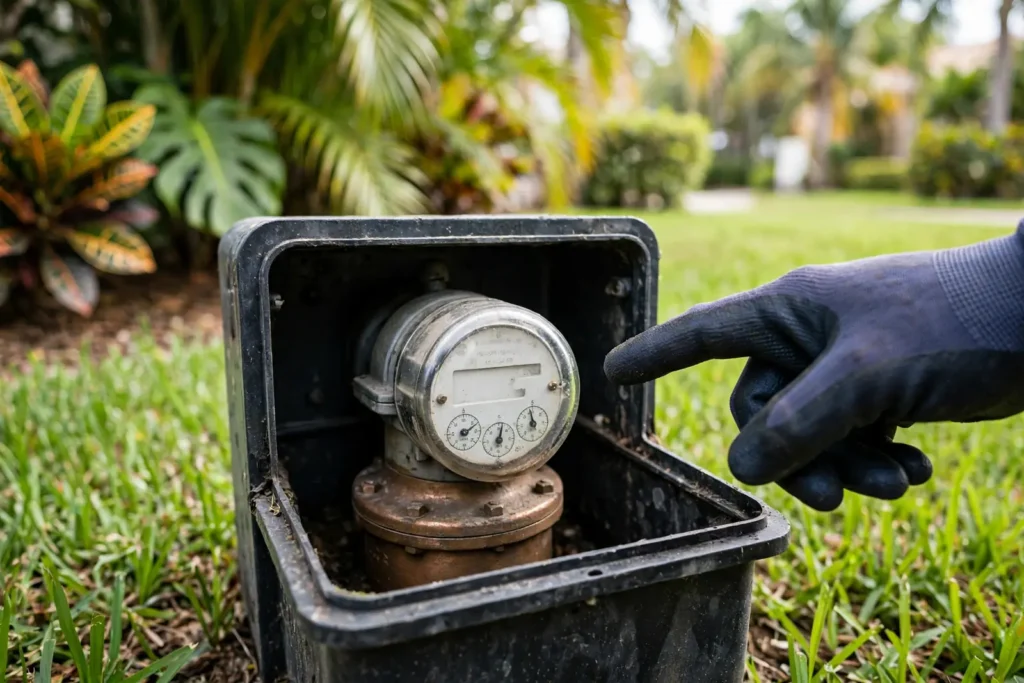
- Your water meter runs when nothing is on. Turn off every tap and appliance, then check the meter. If the dial moves, water is going somewhere it should not.
If several of these signs line up, do not wait. The longer a slab leak runs, the more soil washes out and the more expensive the repair becomes.
How Slab Leaks Are Detected
Guessing is not a strategy with slab leaks. Professional leak detection uses specialized equipment to pinpoint the leak before anyone picks up a jackhammer:
Acoustic listening devices. Sensitive ground microphones pick up the sound of pressurized water escaping a pipe, letting a technician triangulate the leak’s location through the concrete.
Thermal imaging. Infrared cameras detect the temperature difference where hot water has warmed the slab, narrowing the search area to a few square feet.
Moisture meters and humidity mapping. These confirm where moisture has spread under flooring, helping distinguish the leak’s path from secondary dampness.
Pressure testing. Isolating sections of the plumbing system and monitoring pressure drops confirms which line is leaking and whether there are multiple leaks.
Video pipe inspection. For drain-side slab leaks, a camera run through the line shows cracks, breaks, and root intrusion directly.
Accurate detection matters because it determines how invasive the repair needs to be. A leak located within inches can often be fixed through a small, targeted opening rather than tearing up half a room.
Slab Leak Repair Options
Once the leak is located, a trusted local pro will recommend one of these approaches based on the pipe’s condition, the leak’s location, and your home’s layout:
The concrete is opened at the leak’s exact location, the damaged pipe section is cut out and replaced, and the slab is patched. This is the least expensive option and works well for a single, clearly located leak in an otherwise healthy pipe. Most spot repairs take a day.
Instead of opening the slab, the leaking line is abandoned in place and a new line is routed through walls or the attic. Rerouting is common in Miami when the leak is under an expensive floor (marble, large-format tile) or when the buried pipe is in poor condition overall. It avoids slab demolition entirely.
For some situations, an epoxy barrier coating can be applied inside the existing pipe to seal pinhole leaks without excavation (NSF/ANSI 61-rated epoxy systems are made for potable water lines). Whether this is appropriate depends on the pipe material, pipe condition, and the extent of damage, so ask your pro whether your case qualifies.
If the plumbing system has multiple leaks, or the buried pipes are broadly corroded, replacing the entire system is often cheaper over the long run than a series of spot repairs. This is common in Miami homes with original copper plumbing from the 1960s through the 1980s.
A good pro explains the trade-offs honestly: spot repair is cheapest today, rerouting avoids floor damage, and repiping ends the cycle of repeat leaks. There is no one-size-fits-all answer, which is exactly why the free estimate matters.
What Slab Leak Repair Costs in Miami
Costs vary widely with the repair method, the leak’s location, and the flooring involved. Spot repairs are generally the least expensive; reroutes cost more because they involve new pipe runs through the structure; full repipes are the largest investment but solve the problem permanently.
What you should expect from any reputable pro:
- A free, written estimate before work begins
- Clear explanation of why the recommended method fits your situation
- No pressure to choose the most expensive option
- Flooring restoration discussed upfront (tile matching, for example, is a real concern in Miami homes with discontinued patterns)
Call +13057036568 to talk through your situation and get an honest assessment.
Preventing Future Slab Leaks
You cannot change Miami’s geology, but you can reduce your risk:
- Watch your water bill monthly. A sudden jump is the earliest warning most homeowners get.
- Keep water pressure in a healthy range. Plumbing code caps static water pressure at 80 psi, so where street pressure runs higher, a pressure regulator (PRV) brings it down. Excessively high pressure stresses pipes and shortens their life.
- Address hard water. A water softener or treatment system reduces the hard minerals that form scale and contribute to corrosion inside pipes.
- Fix small leaks fast. A dripping faucet or running toilet keeps the system under constant demand.
- Know your pipe material. If your home still has its original galvanized or aging copper lines, have them evaluated before a leak forces the issue.
Service Areas
Miami Plumber Co connects homeowners with trusted slab leak specialists throughout Miami-Dade County, including Miami, Hialeah, Kendall, Coral Gables, Pinecrest, Homestead, North Miami, Miami Lakes, Doral, Miami Beach, and surrounding neighborhoods.
—
CTA Blocks
Warm floors, rising water bills, or damp spots? Get a free slab leak assessment from a trusted local pro. Call +13057036568.Mid-page CTA (after repair options):
Every slab leak is different. Talk through your options with someone who fixes these every week in Miami-Dade. +13057036568Closing CTA (after FAQ):
Fast detection, honest repair options, free estimates across Miami-Dade County. Call Miami Plumber Co at +13057036568.— *Internal links used: leak detection (detection methods section).* *Word count: ~1,550. Verify markers remaining: 0.*
Frequently Asked Questions
What is a slab leak?
A slab leak is a leak in a water or sewer pipe located underneath your home’s concrete slab foundation. Because most Miami-Dade homes are built slab-on-grade, these pipes are buried and the leak is hidden until secondary signs appear.
How do I know if I have a slab leak or just a regular leak?
The signature signs of a slab leak are warm spots on the floor, the sound of running water with all taps off, unexplained high water bills, damp flooring, and cracks appearing in floors or walls. Professional leak detection equipment pinpoints the source definitively.
Does homeowners insurance cover slab leak repair in Florida?
Many Florida homeowners policies cover the resulting water damage from a sudden slab leak, but coverage for the pipe repair itself and for long-term seepage varies widely by policy. Review your policy or ask your agent before work begins.
How long does slab leak repair take?
A spot repair typically takes one day. Reroutes usually take one to three days depending on the home’s layout. Whole-home repiping can take several days to a week. Your pro will give you a timeline with the estimate.
Will you have to tear up my floors?
Not necessarily. Accurate detection narrows the work area, and rerouting avoids the slab entirely. When concrete must be opened, a good pro keeps the opening as small as possible and discusses flooring restoration with you first.
Are slab leaks common in Miami?
Yes. The combination of slab-on-grade construction, porous limestone soil over the Biscayne Aquifer, a high water table, and aging copper plumbing makes Miami-Dade one of the more slab-leak-prone areas in Florida.
Can a slab leak cause foundation damage?
Yes. Leaking water erodes the sandy soil supporting the slab, which can lead to settling, cracking, and in severe cases structural movement. This is why early detection matters so much.
—